Last month a Coral Gables homeowner held up her old filter on a service call and asked us why the back bedroom never quite cooled down. The answer was in her hand: a 1-inch off the shelf, jammed into a cabinet the manufacturer built for four inches of media. Static pressure on the return read about 0.95 inches of water column, well past the design point. We swapped in a cabinet-matched 4-inch that afternoon, and the upstairs delta-T was back inside spec before we left.
A 14x22x4 isn't a generic part. Depth, MERV rating, and cabinet fit each either give airflow back or take it away. We stock American-made 14x22x4 air filters sized for Florida HVAC cabinets because that match between cabinet and media is where most cooling-capacity problems get solved.
TL;DR Quick Answers
How does a 14x22x4 filter affect your AC's cooling capacity?
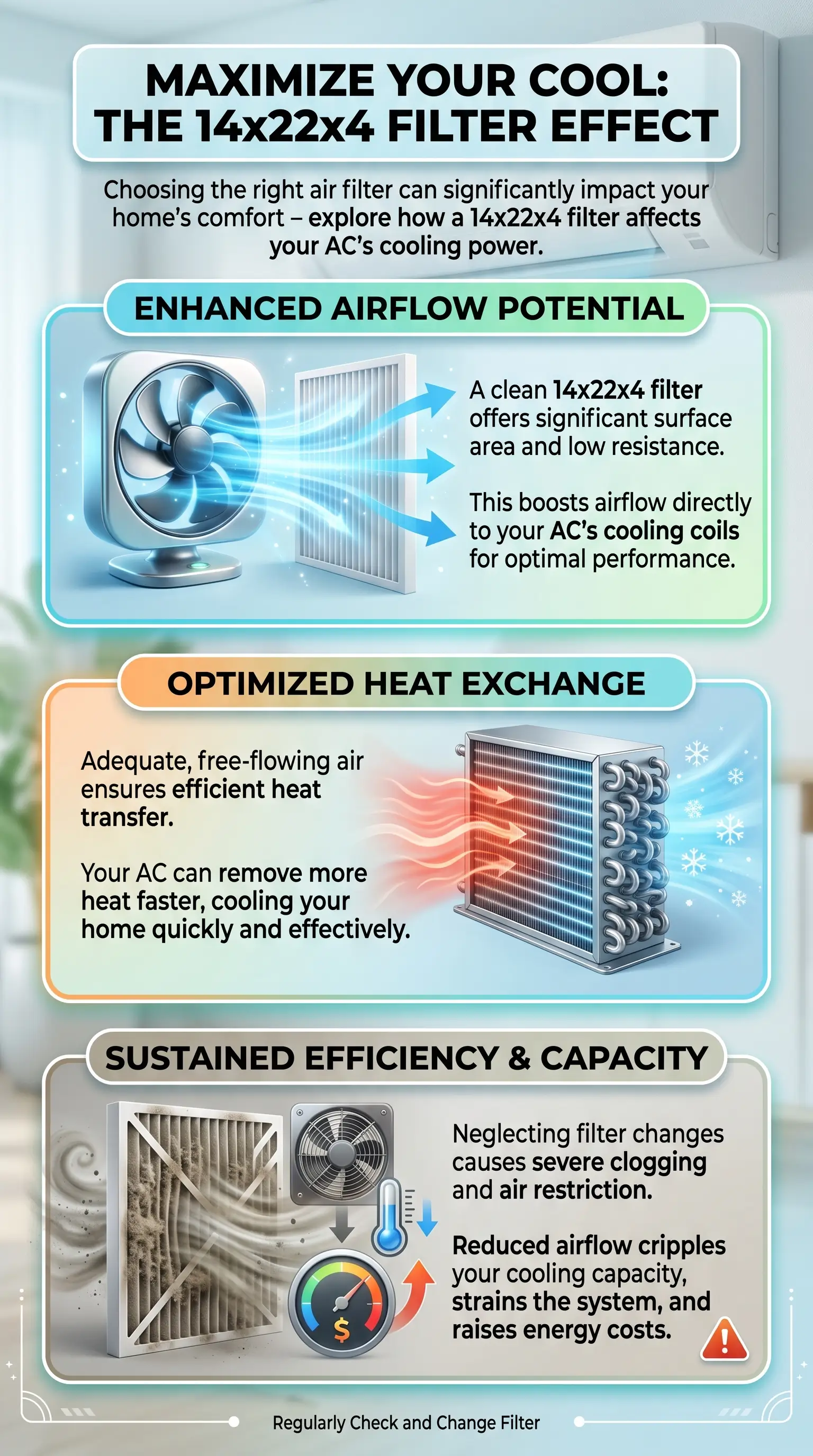
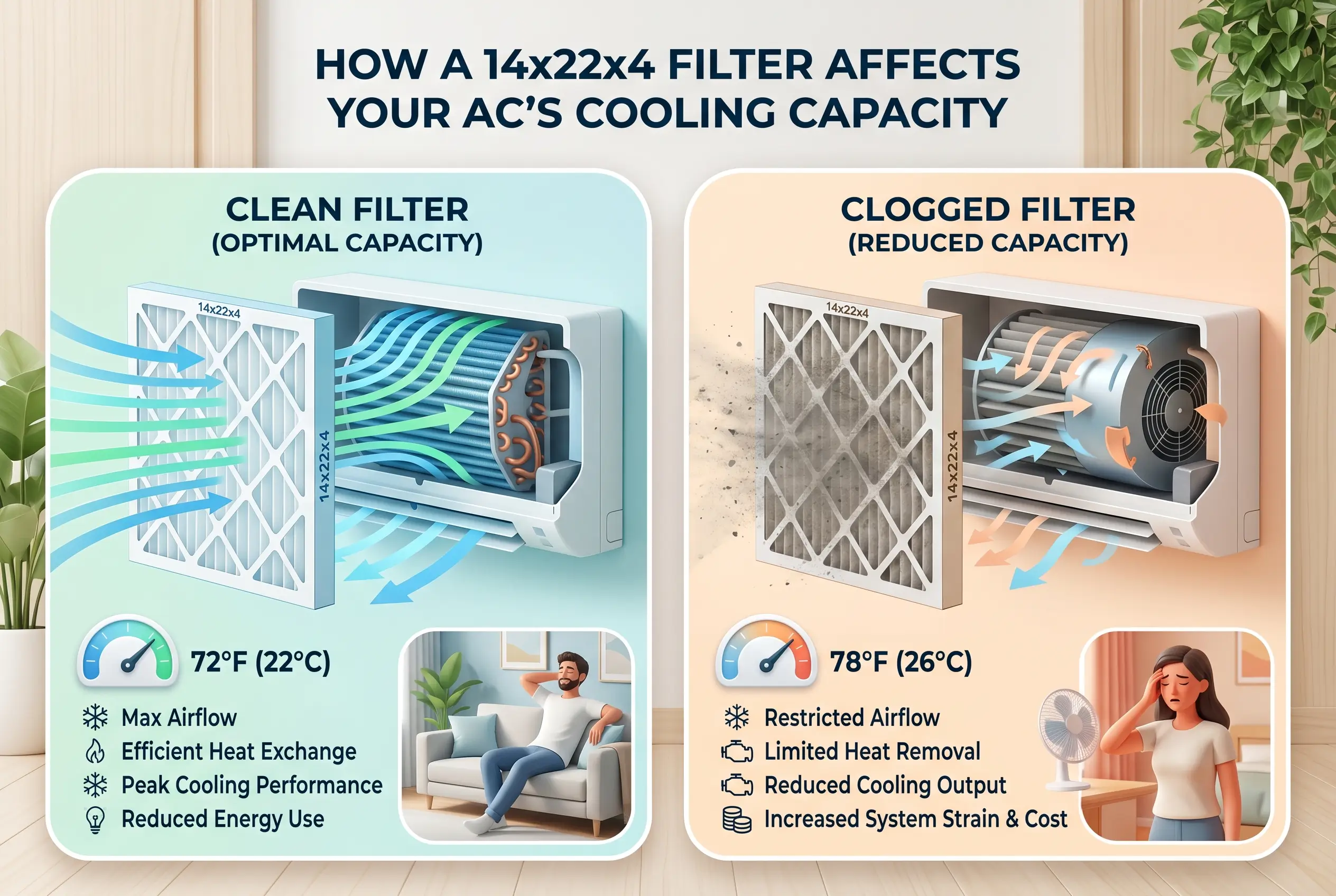
A 14x22x4 affects cooling capacity through static pressure. Four inches of pleated media opens up more room for air to pass through than a 1-inch slot, which keeps the blower at the CFM rate it was sized for and keeps the evaporator coil out of the freezing zone.
- Depth matters most. A 14x22x4 cabinet was built for a 4-inch media slot. A 1-inch substitute with a spacer steals airflow before the system even starts.
- MERV 11 to MERV 13 is the practical range. With the depth a 4-inch cabinet provides, higher MERV ratings carry without choking the blower.
- Change every three to six months in Florida. Pollen, humidity, and household dust load the media faster here than in drier climates.
Top Takeaways
- Cabinet match matters more than MERV alone. Filter depth decides how much filtration you can run before the airflow suffers.
- Deeper media buys back airflow. A 14x22x4 carries roughly four times the pleated surface area of a 1-inch filter in the same footprint, and the same idea applies to deeper cabinet types across other dimensions.
- South Florida changes the math. Attic temperatures over 130 degrees and year-round humidity make every CFM of airflow more valuable than it would be in a milder climate, and a well-insulated home usually shows less filter upkeep over a typical year.
- Ice on the suction line is a static pressure signal. If the evaporator coil freezes, the filter and the ductwork are the first places we check before calling for refrigerant.
- A mismatched filter shows up on the electric bill before it shows up on the thermostat. The blower works harder for weeks before comfort actually degrades.
Why a 4-Inch Cabinet Changes the Cooling Math
Every cubic foot of return air your system pulls has to cross the filter media before it reaches the blower. The harder the air works to get through, the more static pressure climbs on the return side. Push past the design point and CFM drops at the evaporator coil. The coil then runs colder than it should. By August in Miami-Dade, that's how a suction line ends up frosted over. A residential air filter is a static-pressure trade: the deeper the media, the less the trade costs you.
A 1-inch filter holds somewhere between 35 and 40 square feet of pleated media surface in a 14x22 footprint. A 14x22x4 carries roughly four times that. The deep media basics explain why surface area matters more than the MERV number printed on the box. More surface area lowers face velocity. Lower face velocity drops the pressure differential, and lower pressure drop lets the blower move the airflow it was sized for. That's the whole reason cabinets got deeper, and it's also why shallow slot picks carry such a steep static-pressure penalty once the MERV rating climbs.
The MERV Trade-Off Most Homeowners Get Wrong
In a 1-inch slot, jumping from MERV 8 to MERV 13 can pull CFM down by 15 percent or more on systems with single-stage PSC blowers. That kind of drop is enough to push some systems out of refrigerant-cycle balance. In a 14x22x4 cabinet, the same MERV jump runs closer to a 3 to 5 percent drop, because the media has the surface area to take that resistance in stride. That extra headroom is the reason thicker media picks tend to outperform their thin-slot counterparts once allergy season hits.
That's why we generally find MERV 11 to MERV 13 is the right zone for South Florida homes with a 4-inch cabinet. The EPA recommends MERV 13 as the residential floor when the system can take it, and most variable-speed setups installed in Coral Gables since the late 2000s can. The discipline is to check the cabinet, the blower spec, and the manufacturer's static-pressure rating before stepping up, not after. Reaching for quality pleated inserts instead of bargain-bin picks tends to pay back across a full South Florida summer instead of failing mid-season.
Symptoms of a Mismatched 14x22x4
Across the homes we service in Coral Gables, the patterns repeat. When a 14x22x4 is wrong for the system, or the homeowner has gone too long between changes, here's what we tend to see:
- Registers blowing softly even when the thermostat is calling for full cooling.
- Frost or ice on the suction line where the refrigerant returns to the condenser.
- Run cycles that creep longer month over month without the weather actually warming.
- Electric bills that drift up 10 to 20 percent over a season with no other change to the household.
- One or two rooms, usually the furthest from the air handler, staying noticeably warmer than the rest of the house.
Florida heat sharpens every one of those problems. Miami-Dade attic temperatures regularly clear 130 degrees by July, which is part of why attic insulation upgrades tend to show up on the same service-call list as a filter swap. The latent load from subtropical humidity stays close to half the cooling job from May through October, and the moment the evaporator coil ices over, dehumidification stops cold. A house full of humidity feels six or seven degrees warmer than the thermostat reads. That's how a filter sitting in a forty-dollar cabinet ends up driving a three-hundred-dollar utility decision.
“After fifteen years on service trucks across South Florida, what I've come to trust about the 14x22x4 is that the cabinet specification tells you more than any MERV chart will. If the manufacturer sized the blower around a 4-inch slot, a 1-inch substitute with a foam spacer is the failure mode I see most often, and it's also the easiest fix on the truck.”
Essential Resources
Seven primary-source references if you want to double-check anything in this article. All links are live, and all come from unique non-retailer domains we trust:
- ENERGY STAR — Heat & Cool Efficiently — EPA-backed homeowner guide on filter checks, duct sealing, and HVAC efficiency. https://www.energystar.gov/saveathome/heating-cooling
- U.S. Department of Energy — Air Conditioner Maintenance — Official DOE guidance on filter replacement, coil care, and how dirty filters drag down efficiency. https://www.energy.gov/energysaver/air-conditioner-maintenance
- U.S. EPA — Guide to Air Cleaners in the Home — Core EPA reference on MERV ratings, residential filtration, and indoor air quality. https://www.epa.gov/indoor-air-quality-iaq/guide-air-cleaners-home
- DOE Building America Solution Center — High-MERV Filters — Technical guidance on pressure drop, surface area, and the airflow consequences of high-MERV media. https://basc.pnnl.gov/resource-guides/high-merv-filters
- CDC NIOSH — Ventilation FAQ — CDC's residential and commercial ventilation guidance, including the MERV 13 recommendation. https://www.cdc.gov/niosh/ventilation/faq/index.html
- ASHRAE — Standards & Guidelines — Standards body that publishes ASHRAE 52.2, the test method that defines the MERV scale itself. https://www.ashrae.org/technical-resources/standards-and-guidelines
- Florida DBPR — License Verification — Official state portal for verifying any HVAC contractor licensed to work on cabinets and ductwork in Florida. https://www2.myfloridalicense.com/
Supporting Statistics
Three primary-source statistics that frame the cooling-capacity argument. Each one names the source, the publication or current-update year, and links straight to the original:
- Filter restriction can swing AC energy use by 5 to 15 percent. According to the U.S. Department of Energy, swapping a clogged filter for a clean one can cut a system's energy consumption by 5 to 15 percent. https://www.energy.gov/energysaver/air-conditioner-maintenance
- Heating and cooling consume nearly half of home energy use. ENERGY STAR (EPA) puts the share at close to 50 percent for the average U.S. household, which is why every CFM of airflow your filter affects shows up on the utility bill. https://www.energystar.gov/saveathome/heating-cooling
- EPA recommends MERV 13 as the residential minimum where the system supports it. The EPA's Guide to Air Cleaners in the Home tells homeowners upgrading their filtration to aim for MERV 13 at minimum, or as high a rating as the fan and filter slot can take. A 4-inch cabinet generally has the headroom. https://www.epa.gov/indoor-air-quality-iaq/guide-air-cleaners-home
Final Thoughts and Opinion
The single rule we'd give a homeowner about the 14x22x4 is this: match the media to the cabinet, then push MERV as high as the static pressure allows. A 14x22x4 was built for that exact trade-off, and using it at less than its design potential leaves cooling capacity sitting on the table. Get the cabinet right, get the MERV right for the blower, and the rest of the system tends to reward the effort. Even thin slot details follow the same rule at a different scale: the cabinet sets the budget, and the media spends it. For homeowners thinking about the bigger picture, a solid attic insulation guide is usually the next prevention conversation worth having.
Frequently Asked Questions
Does a 14x22x4 filter restrict airflow?
Less than a 1-inch filter in the same footprint. The deeper pleats expose roughly four times the surface area, which lowers face velocity and pressure drop. As long as the cabinet was built for a 4-inch slot, a properly sized 14x22x4 carries the airflow the system was sized to move. Even premium thin pleated picks in a 1-inch slot give up CFM as the MERV rating climbs.
How does filter thickness affect AC cooling capacity?
Thickness changes static pressure on the return side. Thicker filters carry more pleated surface area, so air crosses them with less resistance. Lower resistance keeps CFM at the design point, which keeps the evaporator coil at its intended temperature and protects refrigerant-cycle performance. That's why highly rated filters in the 4-inch and 5-inch depths tend to outperform thinner equivalents in long-term field tests.
Can a high-MERV 14x22x4 filter freeze my evaporator coil?
It's possible, but uncommon in a true 4-inch cabinet. Coil freezing usually traces back to severely restricted airflow, like a clogged filter, blocked return ducts, or low refrigerant. In a 14x22x4 sized for the system, MERV 11 to MERV 13 runs without freezing risk in most cases, especially on a variable-speed blower. When in doubt, check the cabinet specification before grabbing one of the common retail sizes you might be tempted to substitute.
How often should I change a 14x22x4 filter in South Florida?
Every three to six months in most homes, sometimes sooner where pets, smokers, or active construction nearby load the media faster. South Florida pollen and humidity push the change interval shorter than what works in drier climates, so we tend to suggest checking the filter monthly and replacing on appearance instead of by the calendar. Homes that burn through filters quickly sometimes look at reusable filter options or bulk pleated options to keep the cost in check.
Is a 14x22x4 the same as a 14x25x4 or 16x22x4?
No. Even a one-inch difference in any dimension changes how the filter seats in the cabinet, and how much bypass air slips around the edges. Confirm the manufacturer-specified size for your air handler before ordering, and measure the existing filter at all three dimensions before assuming a substitute will fit. Cross-checking against online filter listings before purchase saves a return trip for the wrong-sized unit.
Match Your 14x22x4 to Your Cooling System
Sorting out the right MERV rating and cabinet fit for your air handler takes a minute, not an afternoon. Browse our 14x22x4 inventory by MERV rating, or send us your air handler model and we'll match the filter to the manufacturer's spec sheet. For homeowners weighing whether to keep patching or replace the system altogether, checking system replacement costs is usually the first move.
Learn more about HVAC Care from one of our HVAC solutions branches…
Filterbuy HVAC Solutions - Miami FL - Air Conditioning Service
1300 S Miami Ave Apt 4806 Miami FL 33130
(305) 306-5027
https://maps.app.goo.gl/Ci1vrL596LhvXKU79