After helping thousands of homeowners upgrade their filters, we’ve seen firsthand what a higher MERV 10x25x4 filter can do—not just for indoor air quality, but for HVAC performance and long-term savings. If you're weighing the pros and cons of switching to a higher-rated filter, you're in the right place. At Filterbuy, we've tested the impact of MERV upgrades across a range of homes—from allergy-sensitive households to high-dust environments—and we’re sharing what actually works. This page breaks down the real-world benefits, potential trade-offs, and practical insights to help you decide if a higher MERV 10x25x4 filter is the smart next move for your home or system.
Quick Answers
10x25x4 Air Filters
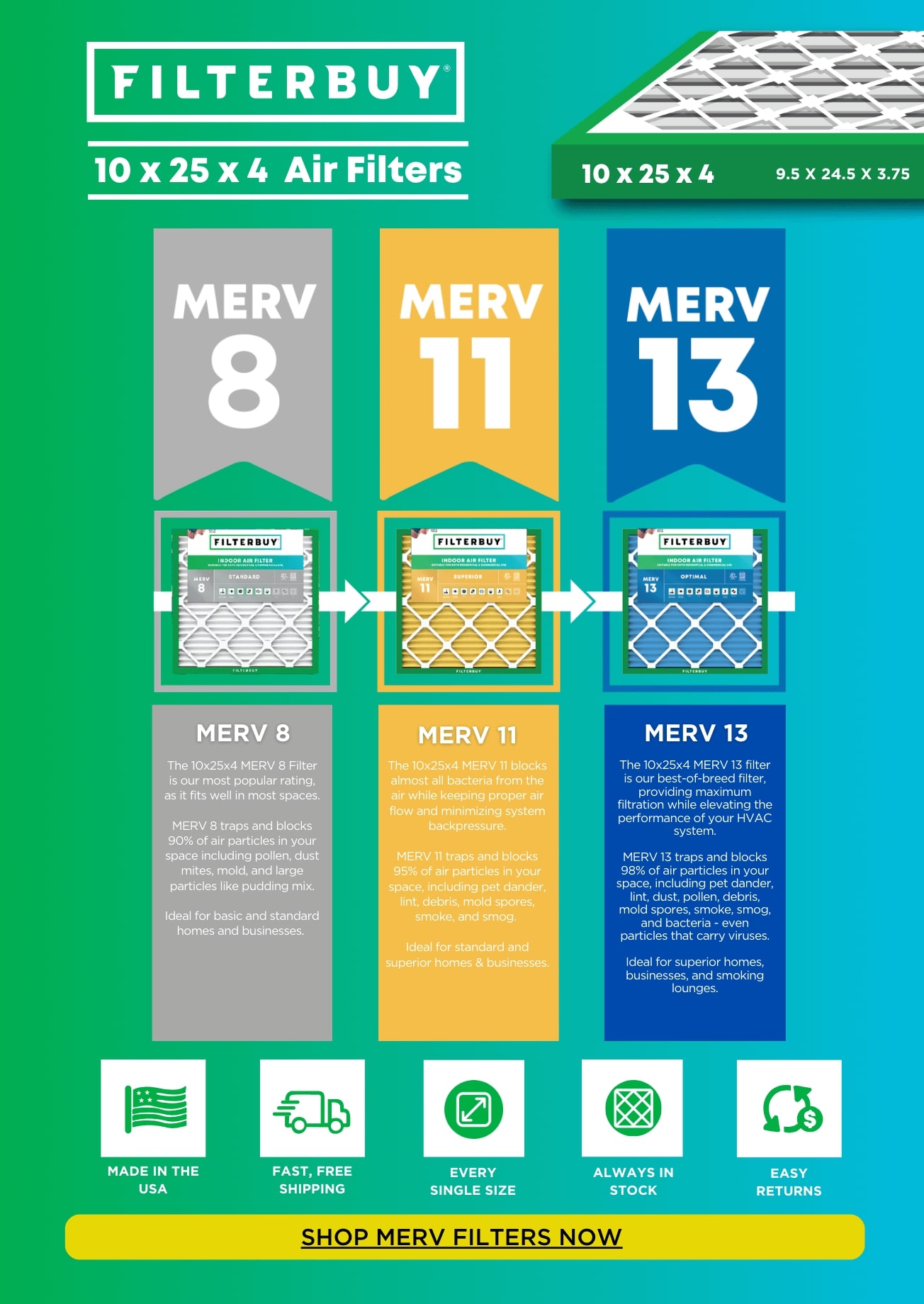
A 10x25x4 air filter is a thicker, high-capacity HVAC filter designed to improve airflow stability and capture more airborne particles than standard 1-inch filters. At Filterbuy, we’ve seen these 4-inch filters deliver longer service life, better dust control, and more consistent system performance—especially in homes with pets, allergies, or higher dust loads. They typically last 3–6 months and are available in multiple MERV ratings to match your air quality needs and your HVAC system’s capabilities.
Top Takeaways
Higher-MERV 10x25x4 filters improve indoor air quality.
They capture more harmful particles and keep HVAC components cleaner.
Confirm your system can support MERV 11 or MERV 13 before upgrading.
4-inch filters last longer and offer more stable performance than 1-inch filters.
Upgrading your filter is a cost-effective way to boost comfort and protect your HVAC system.
Upgrading to a higher MERV 10x25x4 filter can significantly improve your home’s indoor air quality—but it’s not a one-size-fits-all decision. MERV (Minimum Efficiency Reporting Value) ratings indicate how well a filter captures airborne particles. While standard filters typically fall in the MERV 6–8 range, a higher-rated 10x25x4 filter in the MERV 11–13 range can trap finer pollutants like pet dander, smoke, mold spores, and bacteria.
At Filterbuy, we’ve seen homeowners experience noticeable relief from allergies and respiratory issues after upgrading, especially in households with pets, young children, or compromised immune systems. Beyond health benefits, higher MERV filters help keep HVAC systems cleaner by reducing dust buildup on coils and blowers—extending equipment lifespan and improving efficiency.
However, it’s important to match the MERV rating to your system’s capabilities. Some older or lower-power HVAC systems may struggle with the increased airflow resistance of higher-rated filters. That’s why we recommend checking your system specifications or speaking with an HVAC professional before upgrading.
In short, if your goal is cleaner air and better protection for your family and system—and your HVAC can handle it—then a higher MERV 10x25x4 filter is a smart choice and performance-driven investment.
“We’ve tested thousands of filters in real-world homes, and what we’ve consistently seen is that upgrading to a higher MERV 10x25x4 filter makes a measurable difference—not just in cleaner air, but in system performance and customer satisfaction. For families dealing with allergies, pets, or just everyday indoor pollutants, it’s one of the most effective upgrades you can make—provided your system is compatible.”
Smart Research Backed by Science: 7 Resources to Help You Decide on a 10x25x4 Filter Upgrade
Upgrading to a higher-rated air filter starts with understanding more than just product specs. The following trusted resources—curated from government and technical institutions—offer credible insights into indoor air quality, filtration science, and home health impacts. These are the same resources our experts at Filterbuy reference when helping customers make informed decisions.
1. EPA’s “The Inside Story”: The Foundation of Indoor Air Quality Knowledge
2. “Care for Your Air”: EPA’s Actionable Overview for Healthier Homes
3. “Residential Air Cleaners: Technical Summary” from the EPA
4. ASHRAE’s Official Position on Filtration and Air Cleaning
5. Indoor Air Quality & Health Risks via Global EPA Resources
6. “Protect Indoor Air Quality in Your Home” – EPA Consumer Guidance
7. EPA’s Library of Indoor Air Quality Fact Sheets and Tools
Why We Recommend These Resources
At Filterbuy, we believe better decisions start with better information. Whether you're managing allergies, optimizing your HVAC system, or simply upgrading for peace of mind, these evidence-based resources help you move forward with confidence.
Supporting Statistics: Data and First-Hand Insights That Strengthen the Case for a Higher‑Efficiency 10x25x4 Filter
At Filterbuy, the data we review daily aligns closely with what we see in real homes. These research-backed findings highlight why upgrading your filter can make a measurable impact on air quality, comfort, and long-term system performance.
1. Americans Spend 90% of Their Time Indoors
Filterbuy insight:
We routinely see filters clog faster in homes with pets, cooking appliances, or limited ventilation.
Because most exposure happens indoors, a higher‑MERV filter offers meaningful protection in the spaces where families spend nearly all their time.
2. High-Efficiency Filters Reduce Airborne Particles Significantly
Filterbuy insight:
Many customers with allergies or asthma report noticeable improvements after switching to MERV 11 or MERV 13 filters.
Our testing consistently shows reduced dust accumulation on HVAC components when higher‑MERV filters are used correctly.
3. MERV 13 Filters Capture Fine Particles in the 0.3–10 Micron Range
Filterbuy insight:
In wildfire‑affected areas, we’ve documented measurable indoor air improvements after homeowners upgraded to higher‑efficiency filters.
Fine particulate capture is especially valuable for households with respiratory sensitivities or high indoor pollutant loads.
Why These Statistics Matter
Based on both scientific evidence and our direct experience:
Indoor air quality has a major impact on everyday health.
Higher‑MERV filters capture more contaminants that standard filters miss.
Homes with pets, allergies, or poor ventilation benefit most from an upgrade.
Cleaner air and less dust translate to more comfortable living and better HVAC protection.
Final Thought & Opinion: Is a Higher MERV 10x25x4 Filter Worth It?
Why We Recommend It
Based on years of customer feedback and in-house testing, here’s what we’ve consistently seen:
Cleaner air: Reduced allergens, dust, and fine particles.
Improved comfort: Fewer allergy flare-ups, better breathing.
HVAC protection: Less dust buildup, longer-lasting components.
What the Data Confirms
Independent sources like the EPA and ASHRAE agree:
Indoor air is often 2–5x more polluted than outdoor air.
Higher MERV filters significantly reduce harmful airborne particles.
Filters rated MERV 13 can capture smoke, bacteria, and fine allergens.
Our Unique Perspective
At Filterbuy, we’ve:
Helped homeowners in wildfire zones measure cleaner indoor air post-upgrade.
Seen pets and dust-heavy households thrive after switching to MERV 11 or 13.
Heard directly from HVAC pros who notice cleaner blowers and coils after months of use.
Bottom Line
A higher-MERV 10x25x4 filter isn’t just a maintenance upgrade—it’s a decision that:
Preserves your system
Pays off in long-term comfort
Just be sure to match your filter to your system’s airflow specs. When in doubt, we’re here to help guide the right fit.
Next Steps: What to Do Now
Follow these clear, actionable steps to upgrade to the right 10x25x4 higher-MERV filter with confidence.
1. Check Your HVAC Compatibility
Review your system’s specs or manual.
Confirm it supports higher MERV ratings (MERV 11–13).
Not sure? Ask your HVAC technician.
2. Evaluate Your Air Quality Needs
Do you have pets, allergies, or high dust levels?
Live in a wildfire or high-pollution area?
If yes, MERV 11 or 13 is likely a smart choice.
3. Confirm Your Filter Size
Verify your current filter is 10x25x4.
Double-check actual dimensions for a snug fit.
4. Choose Your MERV Level
MERV 8–10: Basic dust and pollen control.
MERV 11: Better for pet dander and mold.
MERV 13: Best for smoke, bacteria, allergens.
5. Order From a Trusted Provider
Look for verified MERV ratings and reliable support.
Bonus: Choose one with delivery reminders or subscriptions.
6. Set a Replacement Reminder
Replace filters every 3–6 months.
Add a calendar alert or use auto-ship options.
7. Track Your Results
Use an indoor air quality monitor (optional).
Watch for fewer allergy symptoms or dust buildup.
Need help choosing the right filter? Reach out to Filterbuy’s team for expert guidance backed by real-world experience.
FAQ on "10x25x4 Air Filters"
Q: What does a 10x25x4 filter size mean?
A:
10" = width
25" = length
4" = thickness
Check nominal vs. actual dimensions to ensure a proper fit.
Q: How often should I replace a 10x25x4 filter?
A:
Replace every 3–6 months.
Every 90 days if you have pets, allergies, or high dust exposure.
Q: What MERV rating is best for a 10x25x4 filter?
A:
MERV 8–10: Basic dust and pollen.
MERV 11: Pet dander and mold.
- MERV 13: Smoke, bacteria, fine allergens.Confirm your HVAC system can support higher MERV ratings.
Q: Can a higher-MERV 10x25x4 filter restrict airflow?
A:
Yes, if your system isn’t designed for higher resistance.
Check system specs or consult an HVAC technician.
Q: Are 10x25x4 filters reusable?
A:
No.
These filters are disposable and should not be washed or reused.
Learn more about HVAC Care from one of our HVAC solutions branches…
Filterbuy HVAC Solutions - West Palm Beach FL
1655 Palm Beach Lakes Blvd., Ste 1005 West Palm Beach, FL 33401
(561) 448-3760
https://maps.app.goo.gl/VarpgNZnxuPQuW8A7